Fall 2026 Home Remodeling Trends: What They Mean for Your Next Project
Every fall, there’s a new list of home design trends on Pinterest,

If you’re starting to plan a major remodel in Fort Worth, one of the first questions on your mind is likely, “How much will this cost per square foot?”
It’s a useful question, but cost per square foot doesn’t tell the whole story.
The short answer: at Medford Design-Build, whole-house interior remodels typically range from $75-$200+ per square foot, while home additions usually range from $200-$500+ per square foot.
That’s largely because remodeling the space you already have is very different from creating brand-new square footage. Understanding those differences can help you establish a more realistic budget and determine which approach makes the most sense for your home.
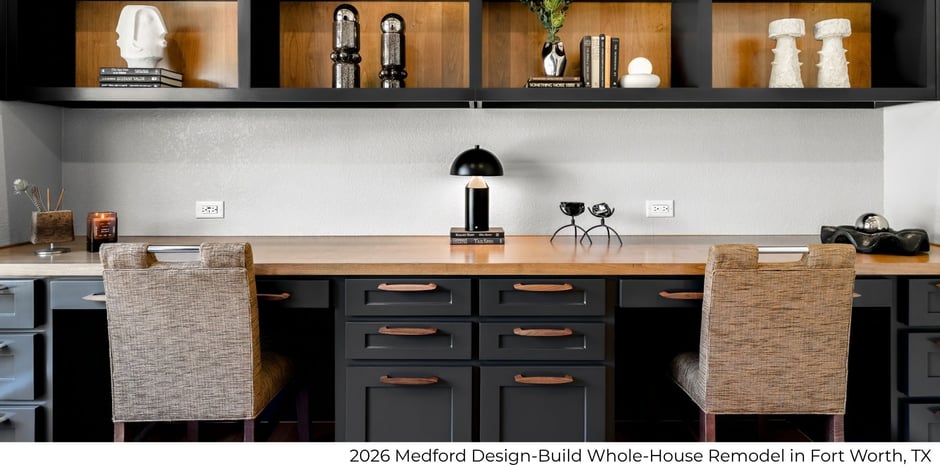
For the projects we complete in the Fort Worth area, $75-$200+ per square foot is a general early planning range for a whole-house interior remodel.
When researching the average cost per square foot for a full home renovation, it’s important to remember that the size of your home and the amount of square footage actually being remodeled aren’t always the same.
A whole home remodel also doesn’t necessarily mean every square foot receives the same amount of work. One area might require major changes, while another might need less extensive updates.
That’s why simply multiplying your home’s total square footage by a single remodeling cost can create a misleading budget. Cost per square foot is a helpful place to start, but developing a defined scope for your particular home provides a more realistic idea of the investment required.
At Medford Design-Build, home additions typically range from $200-$500+ per square foot.
The fundamental difference between remodeling an existing interior and building a new addition is that instead of working entirely within your home’s existing footprint, you’re expanding it. Integrating the new square footage with the existing home adds another layer of scope to the project.
This additional scope is why the cost per square foot for an addition is typically higher than the cost of remodeling interior space you already have.
If you’re thinking about an addition, the first question is whether your existing space can be remodeled to provide the functionality or room you need, or whether you truly need more square footage.
Here’s a good starting comparison: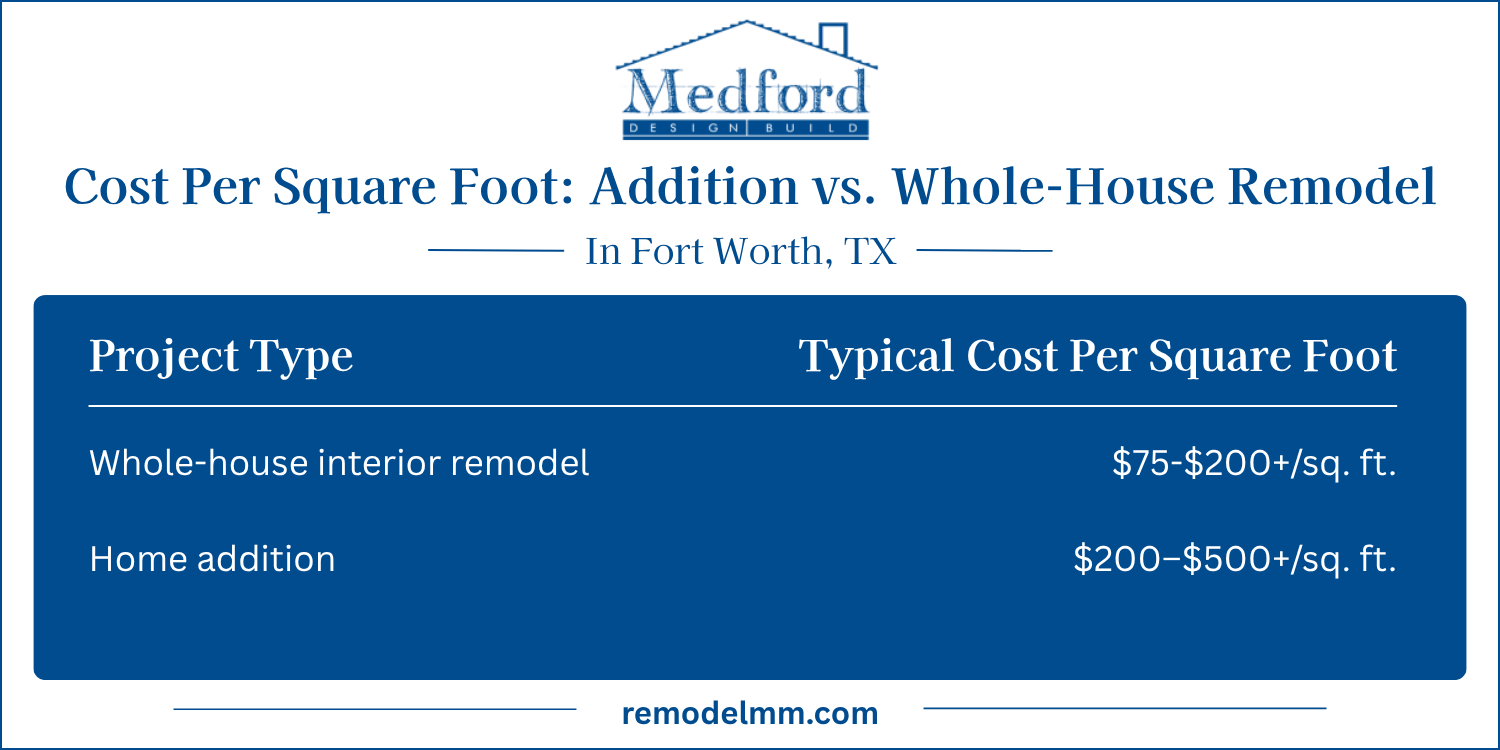
The key difference is straightforward: a whole-house interior remodel changes existing space, while an addition creates new space.
For homeowners who have a house that already has enough square footage but the layout, functionality, or finishes aren’t working, remodeling within the existing footprint might be worth exploring. If your home simply doesn’t have enough space, an addition may be the more appropriate solution, even though the investment per square foot is typically higher.
These ranges aren’t an exact estimate. Every home and remodeling project is different, and the final investment depends on the scope of work required to meet your goals.
The scope of your project is one of the biggest factors when it comes to the cost of a whole-house remodel.
As you start establishing your budget, consider questions such as:
The answers help define the scope of your project and ultimately the investment required to make it happen. They’re also why comparing your project to your neighbor’s renovation or a remodel you saw online can be tricky.
Two homes that are roughly the same size can have very different remodeling costs. For example, one may be primarily focused on updating finishes and fall on the lower end of the spectrum, while a renovation that involves reconfiguring layouts and making structural changes is more likely to end up in the higher range.
Like a whole-house remodel, home addition costs depend on the scope of the project. The size of the addition is an important factor, but square footage alone doesn’t determine your final investment.
As you begin planning an addition, think through questions like:
Additions are also similar to whole home renovations in that two projects with the same square footage can end up with entirely different budgets. An addition that includes a kitchen or bathroom, for example, can cost more than a simple room addition because more utility considerations and trades add complexity.
Working through the details early helps define what will actually be involved in creating your new space.
The right decision depends on what isn’t working in your current home.
A whole-house remodel might make more sense if:
An addition could make more sense if:
Cost is an important factor, but the right approach depends on your home, your goals, and what you need the finished space to accomplish.
Trying to decide whether a remodel or an addition is the right choice? You don’t have to work out all the details alone.
At Medford Design-Build, our design-build process helps homeowners define their goals, develop the design, and establish the project scope before moving into construction. Instead of relying on a broad cost per square foot range alone, we can work toward a plan based on what you want to accomplish in your home.
For the types of projects Medford Design-Build completes, whole-house interior remodels typically range from $75-$200+ per square foot. Your actual investment will depend on the areas being remodeled and the scope of work involved.
Typically, yes. Our home additions generally range from $200-$500+ per square foot, compared to $75-$200+ per square foot for whole home interior remodels. This is because an addition creates new square footage rather than working with space that already exists.
Cost per square foot can help with preliminary budgeting, but it shouldn’t be treated as an exact estimate. The amount of your home being remodeled and the scope of work within those spaces can significantly change the total investment.
Adding square footage generally has a higher cost per square foot than remodeling an existing interior space. That said, the right approach depends on what you need your home to accomplish and whether your existing footprint can meet those needs.
Start by defining what you want to change and which areas of your home will be affected. Cost per square foot ranges can help establish an initial budget, but developing a clear design and project scope will give you a better understanding of the investment required to meet your goals.
Cost per square foot is a helpful starting point, but your home, goals, and project scope will ultimately determine the actual investment required.
Thinking about a whole-house remodel or an addition? Contact the Medford team to discuss your goals and start planning the right approach for your home.
Every fall, there’s a new list of home design trends on Pinterest,

October means pumpkin patches, fall events, and plenty of reasons to get

When your current home no longer fits your lifestyle, you generally have

Trying to decide where to invest your remodeling budget?
The house is bursting at the seams and you’re quickly running out of space

Thinking about selling your home in Fort Worth, TX? You’re probably